Neck Pain Relief Braces & Supports
-
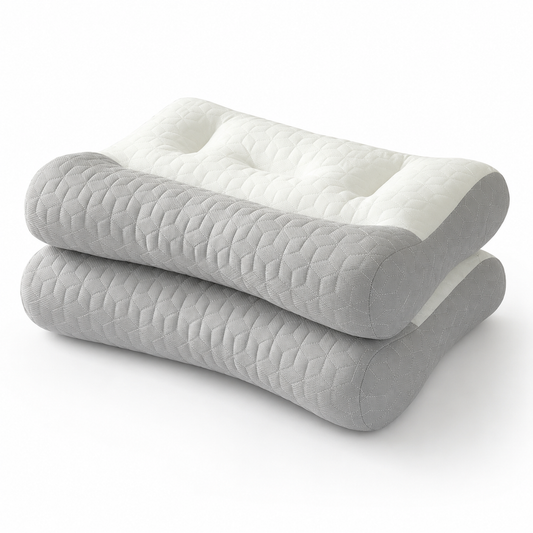
Ergonomic Latex Cervical Support Pillow for Neck Pain Relief
Regular price $71.15Regular price$150Sale price $71.15Sale -
Cool TPE Honeycomb Cervical Pillow for Soothing Neck Support
Regular price $71Regular price$149Sale price $71Sale
Neck-pain can affect head movement, sleep, desk work, driving, and other everyday activities. It may develop from muscle strain, injury, prolonged positioning, or an underlying condition. Explore supportive products designed to complement comfortable routines at home, at work, and while traveling, with professional guidance when needed.
What Is Neck Pain?
Neck pain, sometimes called cervicalgia, is discomfort affecting the cervical spine and surrounding muscles, joints, ligaments, discs, and nerves. It may remain localized or extend into the shoulders, upper back, arms, or head.
Symptoms can begin suddenly after an injury or awkward movement, or develop gradually through muscle strain, prolonged positioning, age-related changes, or an underlying health condition.
How Neck Pain May Feel
Neck discomfort can vary in location and intensity. Common sensations include:
-
Dull or aching pain
-
Sharp pain during movement
-
Muscle tightness or spasms
-
Stiffness and reduced range of motion
-
Tenderness around the neck or shoulders
-
Pain extending into an arm
-
Numbness or tingling
-
Headaches that begin near the neck
-
Weakness in a hand or arm
Numbness, tingling, or weakness may indicate nerve involvement and should be professionally evaluated.
Common Types of Neck Pain
|
Type |
General description |
|
Mechanical neck pain |
Pain related to muscles, joints, movement, or positioning |
|
Neck strain or sprain |
Soft-tissue discomfort following overuse, twisting, or injury |
|
Nerve-related pain |
Pain, tingling, or numbness that may travel into a shoulder or arm |
|
Acute neck pain |
Begins recently and lasts for a relatively short period |
|
Chronic neck pain |
Persists or repeatedly returns for several months or longer |
|
Referred neck pain |
Discomfort felt in the neck but originating from another area |
Symptoms alone cannot determine which type is present.
What Can Aggravate Neck Pain?
Neck discomfort may become more noticeable during:
-
Prolonged computer or phone use
-
Driving for extended periods
-
Sleeping in an uncomfortable position
-
Repetitive lifting or reaching
-
Sudden head movement
-
Carrying an uneven load
-
Certain sports or physical activities
-
Stress-related muscle tension
No single posture is automatically responsible for all neck pain. Movement variety, sleep, stress, physical capacity, and general health may also influence symptoms.
Neck Supports and Comfort Products
Cervical pillows, neck cushions, travel pillows, and workstation accessories may complement a comfortable routine when appropriately selected. They cannot diagnose the cause of neck pain, repair an injury, or guarantee fast relief.
Seek urgent medical care for neck pain following major trauma or occurring with fever and severe headache, confusion, loss of coordination, increasing weakness, chest pain, difficulty breathing, or new bladder or bowel problems.
Common Symptoms That May Accompany Neck Pain
Neck pain may occur with stiffness, muscle tightness, headaches, or symptoms extending into the shoulders and arms. The pattern can vary depending on whether the discomfort is associated with muscle strain, an injury, arthritis, or nerve irritation.
Symptoms may begin suddenly or develop gradually. Their location and intensity can offer useful clues, but they cannot confirm the underlying cause.
Common Neck-Pain Symptoms
-
Neck stiffness: Difficulty turning, bending, or tilting the head.
-
Muscle tightness: Tension across the neck, shoulders, or upper back.
-
Muscle spasms: Sudden, involuntary tightening of the neck muscles.
-
Localized tenderness: Sensitivity when pressure is applied to a specific area.
-
Sharp pain: A sudden sensation triggered by certain head or neck movements.
-
Dull aching: Ongoing discomfort that may worsen after prolonged positioning.
-
Reduced range of motion: Difficulty checking blind spots, looking upward, or turning the head.
-
Headaches: Pain that may begin near the base of the skull and extend toward the forehead.
-
Shoulder or arm pain: Discomfort that travels away from the neck.
-
Numbness or tingling: Altered sensation in an arm, hand, or fingers.
-
Weakness: Reduced strength in the shoulder, arm, hand, or grip.
Symptoms and Possible Areas Involved
|
Symptom pattern |
Area that may be involved |
|
Localized stiffness and aching |
Muscles, ligaments, or joints |
|
Pain extending into a shoulder or arm |
Nerve root or referred pain |
|
Tingling or numbness in the hand |
Possible nerve irritation |
|
Headache beginning near the neck |
Upper-neck muscles or joints |
|
Weak grip or arm weakness |
Possible neurological involvement |
|
Balance or coordination problems |
Possible spinal-cord involvement requiring prompt evaluation |
These patterns are not diagnostic and should be assessed by a healthcare professional when persistent or severe.
How Symptoms May Affect Daily Activities
Neck discomfort may make it difficult to:
-
Turn the head while driving
-
Work at a computer
-
Look down at a phone or book
-
Find a comfortable sleeping position
-
Lift or carry objects
-
Exercise or play sports
-
Complete grooming and household tasks
-
Concentrate during work or study
Warning Signs That Need Medical Attention
Seek immediate or urgent medical care when neck pain occurs with:
-
A serious fall, collision, or other trauma
-
Fever, severe headache, confusion, rash, or marked neck stiffness
-
Increasing arm or leg weakness
-
Loss of coordination or difficulty walking
-
New bladder or bowel-control problems
-
Chest pain, sweating, nausea, or difficulty breathing
-
Trouble swallowing or speaking
-
Sudden severe pain unlike previous episodes
Cervical pillows, travel cushions, and ergonomic accessories may add comfort to an appropriate setup, but they cannot diagnose or treat the cause of neurological or emergency symptoms.
Types of Neck Pain
Neck pain can be classified by its duration, location, symptom pattern, or suspected source. Some types remain localized around the cervical spine, while others extend into the shoulders, arms, hands, upper back, or head.
These categories can help describe symptoms, but they do not replace a professional diagnosis.
Neck Pain by Duration
|
Type |
General duration |
Description |
|
Acute neck pain |
Usually less than 4 weeks |
Begins recently, sometimes after strain, awkward movement, or injury |
|
Subacute neck pain |
Approximately 4 to 12 weeks |
Continues beyond the initial acute stage |
|
Chronic neck pain |
12 weeks or longer |
Persists or repeatedly returns over time |
Duration does not necessarily indicate severity. Sudden symptoms may require urgent care, while chronic discomfort may fluctuate in intensity.
Neck Pain by Symptom Pattern
|
Neck-pain type |
Common characteristics |
|
Mechanical neck pain |
Pain associated with muscles, joints, movement, or positioning |
|
Muscular neck pain |
Tightness, aching, tenderness, or spasms in surrounding muscles |
|
Radicular pain |
Sharp, burning, or shooting pain that may extend into an arm |
|
Referred pain |
Pain felt in the neck but originating from another nearby structure |
|
Cervicogenic headache |
Head pain that may be associated with structures in the upper neck |
|
Whiplash-related pain |
Neck pain and stiffness following rapid back-and-forth movement |
|
Myelopathic symptoms |
Neck problems accompanied by possible spinal-cord signs |
Mechanical and Muscular Neck Pain
Mechanical neck pain commonly changes with movement, activity, or position. It may be associated with muscle strain, joint irritation, prolonged computer use, repetitive tasks, or sleeping in an uncomfortable position.
Possible symptoms include:
-
Localized aching
-
Neck and shoulder tightness
-
Muscle spasms
-
Reduced range of motion
-
Pain when turning or tilting the head
-
Tenderness around the neck or shoulder blades
Nerve-Related Neck Pain
A cervical nerve may become irritated or compressed, sometimes causing symptoms beyond the neck. These may include:
-
Pain extending into a shoulder or arm
-
Burning or electric sensations
-
Numbness or tingling
-
Hand or finger symptoms
-
Weakness in an arm, hand, or grip
Persistent numbness or weakness should be evaluated promptly.
Neck Pain With Possible Spinal-Cord Symptoms
Spinal-cord involvement is less common but potentially serious. Warning signs may include:
-
Difficulty walking
-
Balance or coordination problems
-
Loss of hand dexterity
-
Weakness affecting the arms or legs
-
New bladder or bowel-control problems
These symptoms require prompt medical assessment.
Support Products for Different Neck-Pain Types
Cervical pillows, neck cushions, and ergonomic accessories may complement a comfortable routine for some users. However, pain type cannot be reliably self-diagnosed, and a support product cannot treat nerve compression, spinal-cord problems, fractures, or other serious conditions.
Neck Pain by Location: Left, Right, Back, and Side
The location of neck pain may provide clues about the muscles, joints, nerves, or other structures involved. Discomfort may affect the left side, right side, back, or both sides of the neck and can sometimes extend into the shoulders, upper back, head, or arms.
Pain location alone cannot identify the cause. Similar symptoms can result from muscle strain, joint irritation, nerve problems, injury, or an underlying medical condition.
Comparing Neck Pain by Location
|
Pain location |
How it may feel |
Possible associated factors |
|
Left-side neck pain |
Aching, tightness, tenderness, or sharp pain |
Muscle strain, sleeping position, joint irritation, or nerve symptoms |
|
Right-side neck pain |
Localized stiffness, spasms, or pain with movement |
Repetitive activity, carrying, driving, strain, or joint irritation |
|
Back of the neck |
Tightness, stiffness, or pain near the base of the skull |
Prolonged positioning, muscle tension, headache, or cervical-joint problems |
|
Both sides of the neck |
General stiffness, aching, or reduced movement |
Muscle tension, illness, overuse, arthritis, or prolonged positioning |
|
Side of neck into shoulder or arm |
Burning, shooting, tingling, or aching |
Possible nerve irritation or referred pain |
Left-Side and Right-Side Neck Pain
One-sided neck pain may develop after:
-
Sleeping in an uncomfortable position
-
Turning the head suddenly
-
Carrying a bag on one side
-
Holding a phone between the ear and shoulder
-
Working with the screen positioned off-center
-
Repetitive reaching or lifting
-
Participating in sports or physical activity
-
Experiencing a fall or collision
Pain on one side is not automatically more serious than pain on the other. The accompanying symptoms and circumstances are more important than the side involved.
Pain at the Back of the Neck
Pain at the back of the neck may occur with muscle tightness, reduced movement, or headaches beginning near the base of the skull. It may become more noticeable during computer work, phone use, driving, reading, or prolonged sitting.
Persistent pain near the base of the skull should be evaluated when accompanied by severe headache, dizziness, vision changes, numbness, weakness, fever, or neurological symptoms.
Side Neck Pain That Travels
Neck pain extending into the shoulder, arm, hand, or fingers may involve a cervical nerve. Possible symptoms include:
-
Burning or electric pain
-
Numbness or tingling
-
Reduced grip strength
-
Arm or hand weakness
-
Pain aggravated by certain neck movements
Increasing weakness or loss of coordination requires prompt medical attention.
When Location-Based Neck Pain Needs Urgent Care
Seek urgent medical care when neck pain occurs with:
-
Chest pain, sweating, nausea, or shortness of breath
-
Fever, severe headache, confusion, rash, or pronounced neck stiffness
-
Significant arm or leg weakness
-
Difficulty walking or maintaining balance
-
New bladder or bowel-control problems
-
Trouble swallowing or speaking
-
Pain following major trauma
Cervical pillows and neck-support products may add comfort for some users, but they cannot diagnose or treat the cause of left-, right-, back-, or side-neck pain.
What Causes Neck Pain?
Neck pain can result from muscle strain, joint irritation, injury, nerve compression, age-related spinal changes, or an underlying medical condition. In some cases, no single cause can be identified from symptoms or imaging alone.
Pain may begin suddenly after an accident or awkward movement, or develop gradually during repetitive activity, prolonged positioning, or changes affecting the cervical spine.
Common Causes of Neck Pain
|
Possible cause |
Symptoms that may occur |
|
Muscle strain |
Tightness, tenderness, spasms, or pain during movement |
|
Ligament sprain |
Pain, stiffness, and reduced range of motion after injury |
|
Whiplash |
Neck pain, headaches, stiffness, dizziness, or shoulder discomfort |
|
Osteoarthritis |
Aching, stiffness, or reduced movement |
|
Degenerative disc changes |
Gradual discomfort that may vary with activity or position |
|
Herniated disc |
Neck pain with possible arm pain, tingling, or numbness |
|
Pinched nerve |
Burning, shooting pain, weakness, or altered sensation in an arm |
|
Cervical spinal stenosis |
Neck pain with possible arm, hand, balance, or walking problems |
|
Spinal fracture |
Severe pain after trauma or in people with weakened bones |
Daily Activities That May Aggravate Neck Pain
Neck discomfort may become more noticeable during:
-
Prolonged computer or phone use
-
Sleeping in an uncomfortable position
-
Driving for extended periods
-
Repetitive reaching or lifting
-
Carrying a bag on one shoulder
-
Holding a phone between the ear and shoulder
-
Reading with the head bent forward
-
Performing unfamiliar or demanding exercise
-
Keeping a screen positioned off-center
A single posture is not responsible for every case of neck pain. Symptoms may also be influenced by movement variety, physical capacity, stress, sleep, and general health.
Neck Pain From Injuries
Falls, sports impacts, and motor-vehicle collisions can damage muscles, ligaments, joints, discs, nerves, or bones in the neck. Whiplash occurs when the head moves rapidly backward and forward or side to side.
Neck pain after significant trauma should be medically evaluated, especially when accompanied by headache, dizziness, numbness, weakness, or difficulty moving.
Less Common Medical Causes
Less commonly, neck pain may be associated with:
-
Inflammatory arthritis
-
Spinal infection
-
Meningitis
-
Cancer involving the spine
-
Osteoporosis-related fracture
-
Certain vascular conditions
-
Referred pain from the shoulder, jaw, chest, or another area
These conditions cannot be diagnosed using pain location alone.
When to Seek Urgent Care
Seek immediate medical attention for neck pain with:
-
Fever, severe headache, confusion, rash, or pronounced stiffness
-
Chest pain, sweating, nausea, or shortness of breath
-
Increasing weakness in an arm or leg
-
Difficulty walking or maintaining balance
-
New bladder or bowel problems
-
Trouble speaking or swallowing
-
Pain following a major collision or fall
Neck pillows, cushions, and ergonomic accessories may complement comfort-focused routines, but they cannot diagnose or treat the underlying cause of neck pain.
Neck Pain From Sleeping in an Uncomfortable Position
Neck pain after sleeping in an uncomfortable position may feel like stiffness, tightness, aching, or sharp discomfort when turning the head. It can occur when the neck remains rotated, bent, or unsupported for several hours or when a pillow does not suit the sleeper’s position and body dimensions.
Morning neck pain may also have causes unrelated to sleep, particularly when symptoms persist, repeatedly return, or include numbness, tingling, or weakness.
Why Sleeping Position May Affect the Neck
|
Possible factor |
How it may affect comfort |
|
Pillow is too high |
May hold the neck bent away from a comfortable position |
|
Pillow is too low |
May allow the head to tilt without enough support |
|
Sleeping on the stomach |
Often requires the head to remain turned to one side |
|
Worn or flattened pillow |
May no longer provide consistent support |
|
Multiple stacked pillows |
Can place the head and neck at an excessive angle |
|
Unsupportive mattress |
May affect overall spinal positioning |
|
Sudden change in bedding |
May require time to assess fit and comfort |
|
Existing neck condition |
May make certain positions less comfortable |
No single pillow height, material, or sleeping position is ideal for everyone.
Symptoms After Sleeping Awkwardly
You may notice:
-
Stiffness when turning the head
-
Pain on one side of the neck
-
Tightness across the shoulders
-
Tender neck muscles
-
Reduced range of motion
-
A headache beginning near the base of the skull
-
Discomfort that improves after gentle movement
Pain extending into an arm or occurring with numbness or weakness may suggest nerve involvement and deserves professional evaluation.
How to Relieve Neck Pain From Sleeping Wrong
For mild symptoms without warning signs, consider:
-
Avoiding forceful neck movements
-
Continuing gentle daily activity as tolerated
-
Changing positions regularly
-
Using heat or a wrapped cold pack if appropriate
-
Asking a healthcare professional about suitable pain medication
-
Reviewing pillow height and sleep position
-
Avoiding prolonged stomach sleeping if it aggravates symptoms
Do not forcefully stretch, crack, or manipulate a painful neck.
Choosing a Pillow for Neck Comfort
A pillow should fill the space between the head, neck, and sleeping surface without pushing the head excessively forward or sideways. Side sleepers may need a different height from back sleepers because shoulder width and mattress firmness affect alignment.
Consider:
-
Preferred sleeping position
-
Shoulder width
-
Mattress firmness
-
Pillow height and loft
-
Fill material and firmness
-
Shape and adjustability
-
Cleaning and replacement instructions
A cervical or memory-foam pillow may feel comfortable for some users, but it cannot cure neck pain or treat an injury.
When to Seek Medical Care
Consult a healthcare professional if pain is severe, keeps returning, or does not improve. Seek urgent care for neck pain with fever and severe headache, confusion, increasing weakness, difficulty walking, chest pain, trouble breathing, or symptoms following major trauma.
Neck Strains, Sprains, and Whiplash
Neck strains, sprains, and whiplash are soft-tissue injuries that can cause pain, stiffness, muscle tightness, and reduced movement. They may follow a sudden head movement, sports injury, fall, lifting incident, or motor-vehicle collision.
These conditions can produce similar symptoms, but they affect different tissues and may require professional evaluation to rule out fractures, nerve damage, or other injuries.
Neck Strain vs. Sprain vs. Whiplash
|
Condition |
Tissue or mechanism involved |
Common symptoms |
|
Neck strain |
Overstretched or injured muscles or tendons |
Aching, spasms, tenderness, and pain with movement |
|
Neck sprain |
Overstretched or injured ligaments |
Pain, stiffness, swelling, and reduced stability or motion |
|
Whiplash |
Rapid back-and-forth or side-to-side movement of the head |
Neck pain, stiffness, headache, shoulder pain, and dizziness |
Whiplash can involve muscles, ligaments, joints, discs, and nerves rather than one isolated structure.
Common Causes of Neck Strains and Sprains
Possible causes include:
-
Sudden twisting or turning
-
Lifting or carrying a heavy object
-
Contact sports or falls
-
Repetitive overhead activity
-
Abrupt exercise movements
-
Motor-vehicle collisions
-
Sleeping in an uncomfortable position
-
Prolonged activity beyond current physical capacity
Common Whiplash Symptoms
Symptoms may begin immediately or develop hours or days after an injury. They can include:
-
Neck pain and stiffness
-
Reduced range of motion
-
Headaches, often beginning near the base of the skull
-
Shoulder or upper-back pain
-
Muscle tenderness or spasms
-
Dizziness
-
Fatigue or sleep difficulty
-
Numbness or tingling in an arm
-
Difficulty concentrating
Symptoms such as numbness, weakness, confusion, or loss of coordination require prompt medical attention.
How Neck Injuries Are Evaluated
A healthcare professional may ask how the injury occurred, examine neck movement, and check strength, sensation, reflexes, balance, and coordination. Imaging may be ordered when a fracture, serious tissue injury, or neurological problem is suspected.
Pain intensity alone cannot show whether a serious injury is present.
Care and Recovery
Treatment depends on the injury and individual symptoms. A healthcare professional may recommend:
-
Gradual return to normal activity
-
Guided exercises or physical therapy
-
Heat or cold when appropriate
-
Medication when safe and professionally advised
-
Temporary activity changes
-
Follow-up if symptoms continue or worsen
Avoid forceful stretching, neck cracking, or unsupervised manipulation after an injury. Cervical collars should not be used routinely unless prescribed.
When to Seek Urgent Care
Seek immediate medical evaluation for neck pain following significant trauma or occurring with:
-
Increasing arm or leg weakness
-
Numbness or loss of sensation
-
Difficulty walking or maintaining balance
-
Severe or worsening headache
-
Confusion, fainting, or repeated vomiting
-
New bladder or bowel problems
-
Trouble breathing or swallowing
Neck pillows and support products may provide comfort in suitable situations, but they cannot diagnose, stabilize, or heal a neck injury.
Arthritis and Degenerative Conditions of the Neck
Arthritis and age-related changes in the cervical spine can contribute to neck pain, stiffness, headaches, and reduced movement. These changes are often described as cervical spondylosis, an umbrella term that may include wear affecting the discs, joints, and bones of the neck.
Degenerative changes are common with age and do not always cause symptoms. An imaging result alone cannot prove that arthritis or disc changes are responsible for a person’s pain.
Conditions That May Affect the Cervical Spine
|
Condition |
How it may affect the neck |
|
Cervical osteoarthritis |
Joint changes may cause aching, stiffness, or reduced movement |
|
Degenerative disc disease |
Cervical discs may lose height or flexibility over time |
|
Cervical spondylosis |
General age-related changes involving discs, joints, and bones |
|
Bone spurs |
Extra bone growth may form around degenerative joints |
|
Cervical spinal stenosis |
Narrowing may place pressure on the spinal cord or nerves |
|
Cervical radiculopathy |
Nerve-root irritation may cause arm pain, tingling, or weakness |
|
Rheumatoid arthritis |
Inflammation may affect cervical joints and require specialist care |
|
Ankylosing spondylitis |
Inflammatory disease may cause long-term pain and stiffness |
Common Symptoms
Arthritis and degenerative neck conditions may cause:
-
Ongoing or recurring neck pain
-
Stiffness after rest or sleep
-
Reduced ability to turn the head
-
Grinding, clicking, or popping sensations
-
Headaches beginning near the neck
-
Shoulder or upper-back discomfort
-
Pain extending into an arm
-
Numbness, tingling, or weakness
-
Symptoms that vary with activity or position
Neck sounds without pain or neurological symptoms are not always a sign of serious damage.
Cervical Stenosis and Spinal-Cord Symptoms
When narrowing affects the spinal cord, symptoms may include:
-
Difficulty walking
-
Balance or coordination problems
-
Loss of hand dexterity
-
Weakness in the arms or legs
-
Numbness or altered sensation
-
New bladder or bowel-control problems
These symptoms require prompt medical evaluation.
Diagnosis and Treatment
A healthcare professional may use medical history, physical examination, neurological testing, and imaging when appropriate. Treatment depends on the diagnosis and may include guided activity, physical therapy, medication, injections, or surgery in selected cases.
Not everyone with cervical arthritis needs surgery, and treatment should reflect symptoms and functional limitations rather than imaging findings alone.
Support Products for Neck Comfort
Cervical pillows, neck cushions, and ergonomic accessories may provide comfort for some users as part of a broader care plan. Choose products according to sleeping position, body dimensions, firmness preference, and professional guidance.
FAQs
How can I relieve neck pain?
Gentle movement, avoiding aggravating activities, and professionally recommended heat, cold, medication, or physical therapy may help, depending on the cause.
What causes neck pain?
Neck pain may result from muscle strain, injury, arthritis, disc changes, nerve irritation, prolonged positioning, or an underlying medical condition.
How can I relieve neck pain from sleeping wrong?
Review your pillow height and sleep position, avoid forceful movement, and seek medical advice if the pain is severe, persistent, or accompanied by neurological symptoms.
What causes sudden sharp pain in the neck?
Sudden sharp neck pain may be associated with a muscle spasm, joint irritation, nerve involvement, injury, or another condition requiring professional evaluation.
When should I see a doctor for neck pain?
Seek care for persistent pain and urgent help for major trauma, fever with severe headache, weakness, numbness, balance problems, chest pain, or breathing difficulty.