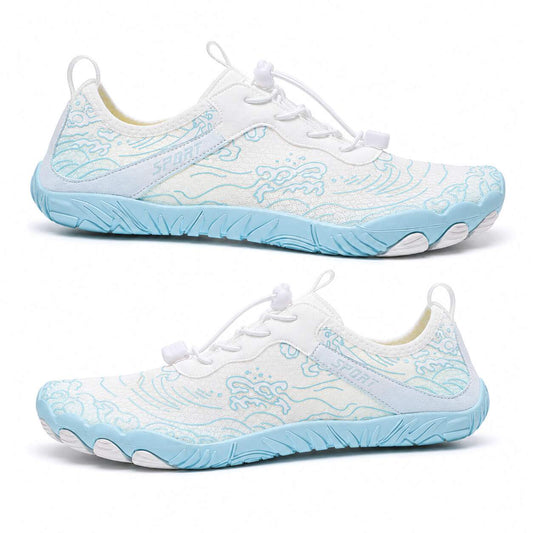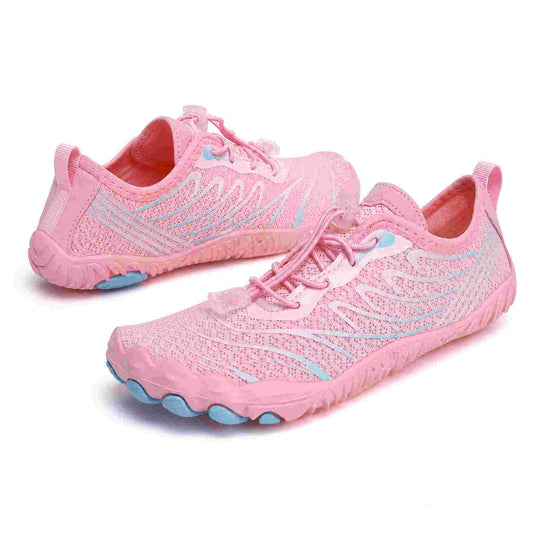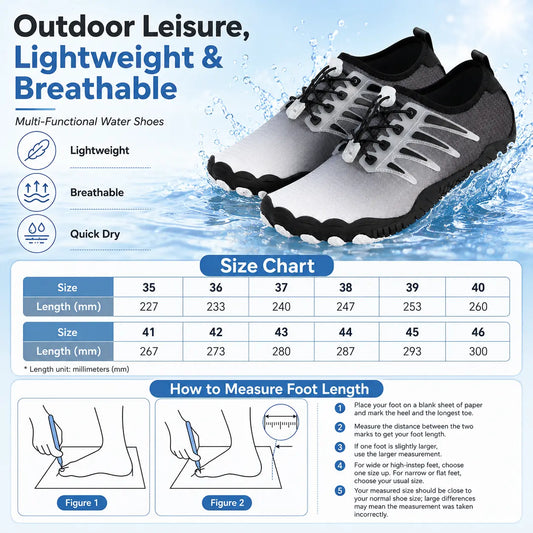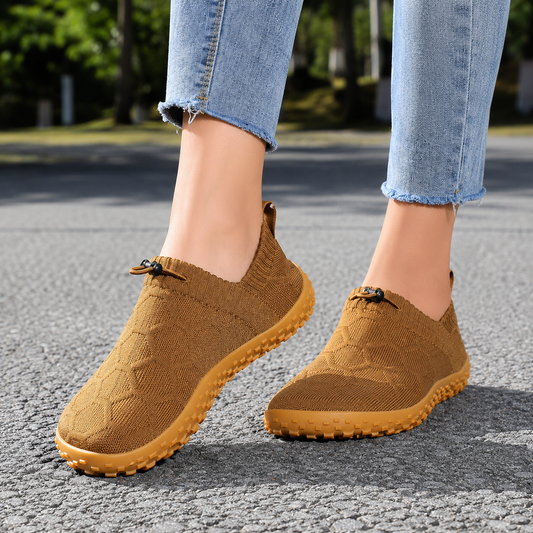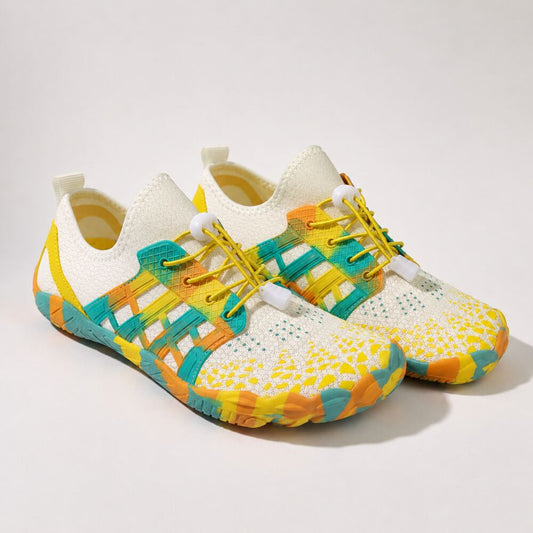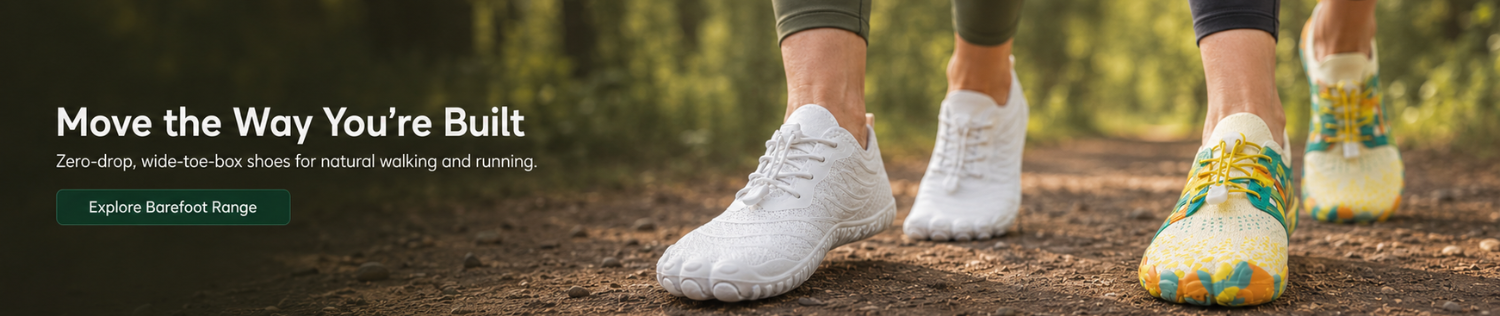
Barefoot Shoes
-
Minimalist Barefoot Shoes with Copper Buckles for Men & Women
Regular price $23Regular price$49Sale price $23Sale -
Outdoor Five-Toe Barefoot Shoes for Aqua Sports & Quick Dry
Regular price $21Regular price$45Sale price $21Sale -
Men's Quick-Dry Barefoot Beach Shoes for Swim & Water Sports
Regular price $22Regular price$59Sale price $22Sale -
Breathable Wide Toe Barefoot Running Shoes for Men & Women
Regular price $25Regular price$55Sale price $25Sale -
Men's & Women's Quick Dry Barefoot Water Shoes for Swimming
Regular price $22Regular price$50Sale price $22Sale
Barefoot Shoes
Barefoot-shoes offer a flexible, lightweight design that allows your feet to move more naturally during everyday activities. With wide toe boxes, thin soles, and minimal heel elevation, they provide enhanced ground feel and freedom of movement. Explore Vendula Care’s options for walking, exercise, travel, and casual wear.
What Are Barefoot Shoes?
Barefoot shoes are minimalist footwear designed to allow the feet to move with less restriction than many conventional shoes. They typically feature a wide toe box, flexible sole, low stack height, and little or no difference in height between the heel and forefoot.
Despite their name, barefoot shoes still provide a protective barrier between your feet and the ground. Designs vary, so review each product’s materials, sole thickness, tread, fit, and intended use before purchasing.
Key Features of Barefoot Shoes
Barefoot footwear generally uses minimal structure and cushioning to create a closer-to-the-ground experience.
|
Feature |
What It Means |
|
Wide toe box |
Provides room for the toes to spread |
|
Zero-drop design |
Keeps the heel and forefoot at approximately the same height |
|
Thin sole |
Increases ground feel |
|
Flexible construction |
Allows the shoe to bend and move with the foot |
|
Lightweight design |
Reduces unnecessary bulk |
|
Minimal cushioning |
Provides less padding than conventional footwear |
Not Every Barefoot Shoe Is the Same
Some barefoot-style shoes use thicker soles, deeper tread, added water resistance, or extra protection for specific activities. A product may include some minimalist features without meeting every traditional barefoot-shoe characteristic.
How Are Barefoot Shoes Different From Traditional Shoes?
Traditional footwear often includes elevated heels, structured arch support, thicker cushioning, and narrower toe areas. Barefoot shoes generally use a flatter, wider, and more flexible construction.
|
Barefoot Shoes |
Traditional Shoes |
|
Wider toe area |
Often more tapered |
|
Minimal heel-to-toe drop |
May include an elevated heel |
|
Thin, flexible sole |
Usually thicker and more structured |
|
Greater ground feel |
More underfoot cushioning |
|
Minimal built-in support |
May include structured arch support |
What Activities Are Barefoot Shoes Used For?
Depending on their design, barefoot shoes may be worn for:
-
Everyday walking
-
Casual activities
-
Running or training
-
Hiking and trail use
-
Water-based activities
-
Travel and lightweight packing
Match the Shoe to the Activity
Barefoot running shoes, hiking shoes, and water shoes require different levels of traction, durability, drainage, and protection. Check the individual product specifications instead of assuming one pair is appropriate for every environment.
Are Barefoot Shoes Suitable for Everyone?
Barefoot shoes are not the right choice for every person or activity. Moving from highly cushioned or supportive footwear to minimalist shoes changes how the feet and lower legs are loaded.
Key Features of Barefoot Shoes
Barefoot shoes are designed to provide a less restrictive footwear experience while protecting the feet from direct contact with the ground. Although designs vary, most barefoot and minimalist shoes share features such as a wide toe box, flexible sole, low stack height, and minimal heel-to-toe drop.
Wide Toe Box
A wide toe box gives the toes more room to spread than the tapered shape found in many conventional shoes. The shoe should feel spacious without allowing the foot to slide excessively.
Width Is Not the Same as Overall Size
Ordering a larger size does not always create the correct toe space. Review the product’s size chart, width information, and measuring instructions before purchasing.
Zero-Drop or Low-Drop Design
Zero-drop barefoot shoes position the heel and forefoot at approximately the same height. Low-drop designs use only a small difference between the two areas.
Check the Product Specifications
Not every shoe advertised as minimalist is completely zero-drop. Review the listed heel-to-toe drop rather than relying only on product images.
Thin, Flexible Sole
A thin sole provides increased ground feel, while flexibility allows the shoe to bend and move more easily with the foot.
Sole Thickness Varies
Barefoot running shoes, hiking shoes, and water shoes may use different sole thicknesses based on terrain, grip, durability, and protection requirements.
Lightweight Construction
Barefoot footwear often uses lightweight uppers, minimal padding, and simplified structural components. This can reduce bulk during walking, training, or travel.
Lightweight Does Not Mean Flimsy
Look at the outsole material, stitching, reinforcement, and intended use when evaluating durability.
Minimal Cushioning and Support
Most barefoot shoes contain less cushioning and built-in arch structure than conventional footwear. This creates a different underfoot experience and may require a gradual adjustment period.
Transition Gradually
Moving too quickly from supportive footwear to minimalist shoes can overload the feet and lower legs. Begin with short periods and increase wear only when comfortable.
Flexible and Secure Upper
The upper portion should move comfortably while holding the heel and midfoot securely. Materials may include mesh, knit fabric, synthetic textiles, leather, or water-friendly fabrics.
Barefoot Shoe Features at a Glance
|
Feature |
Purpose |
What to Check |
|
Wide toe box |
Allows more toe space |
Toe width and overall fit |
|
Zero or low drop |
Creates a flatter platform |
Listed heel-to-toe drop |
|
Thin sole |
Increases ground feel |
Sole thickness and protection |
|
Flexible outsole |
Supports natural bending |
Flexibility in multiple directions |
|
Lightweight build |
Reduces bulk |
Materials and total shoe weight |
|
Minimal cushioning |
Provides a closer ground feel |
Comfort and intended activity |
|
Secure upper |
Helps keep the foot positioned |
Closure system and heel fit |
|
Tread pattern |
Supports traction |
Suitability for road, trail, or water |
Choosing the Right Barefoot Shoes
Select barefoot shoes according to your foot shape, intended activity, terrain, fit preferences, and experience with minimalist footwear. People with diabetes, reduced sensation, poor circulation, injuries, or significant foot conditions should consult a qualified healthcare professional before changing footwear.
Benefits and Limitations of Barefoot Shoes
Barefoot shoes use a wide toe box, flexible sole, minimal cushioning, and little or no heel-to-toe drop. These features create a different walking or running experience from conventional footwear. Understanding both the potential benefits and limitations can help you decide whether minimalist shoes suit your feet, activities, and lifestyle.
Potential Benefits of Barefoot Shoes
Barefoot footwear may appeal to people who prefer lightweight shoes with less structure and a closer connection to the ground.
More Room for the Toes
A wide toe box gives the toes space to spread without the restriction associated with narrow, tapered footwear. Proper sizing remains essential because a shoe that is too wide or long may feel unstable.
Increased Ground Feel
Thin soles allow users to feel more information from the surface beneath their feet. This can be useful for people who prefer greater sensory feedback while walking or exercising.
Greater Footwear Flexibility
Flexible soles can bend and twist more readily than many conventional shoe soles, allowing the footwear to move with the foot.
Lightweight Construction
Minimalist designs often use less material, padding, and structural reinforcement. This makes many barefoot shoes light and convenient for everyday wear, exercise, or travel.
Flat Underfoot Platform
Zero-drop barefoot shoes keep the heel and forefoot at approximately the same height. Some people prefer this flatter platform, although transitioning from elevated footwear requires time.
Possible Limitations of Barefoot Shoes
Barefoot shoes are not suitable for every person, surface, or activity. Their reduced cushioning and structure create important tradeoffs.
Less Cushioning
Thin soles provide less padding against hard surfaces and repeated impact. People accustomed to heavily cushioned footwear may initially find barefoot shoes uncomfortable.
Limited Underfoot Protection
Sharp rocks, rough trails, extreme temperatures, and workplace hazards may require more protection than some minimalist soles provide.
Adjustment Period
Switching quickly to barefoot walking or running can place unfamiliar demands on the feet, ankles, calves, and lower legs. Begin with short periods and increase use gradually.
Minimal Built-In Support
Barefoot shoes generally provide limited arch structure and motion control. People who rely on prescribed orthotics or supportive footwear should seek professional advice before changing shoe types.
Activity-Specific Restrictions
Some workplaces, sports, and trails require protective toe caps, rigid soles, ankle structure, or specialized traction that minimalist footwear may not provide.
Barefoot Shoes: Benefits vs. Limitations
|
Feature |
Potential Benefit |
Possible Limitation |
|
Wide toe box |
Offers more room for toe movement |
May feel loose if sized incorrectly |
|
Thin sole |
Provides increased ground feel |
Offers less protection and cushioning |
|
Flexible construction |
Moves more easily with the foot |
May lack stability for some activities |
|
Zero-drop platform |
Creates a flatter foot position |
Requires gradual adaptation |
|
Lightweight design |
Reduces footwear bulk |
May provide less structural reinforcement |
|
Minimal support |
Offers a less restrictive experience |
May not suit prescribed support needs |
Who Should Use Extra Caution?
Consult a podiatrist or qualified healthcare professional before wearing barefoot shoes if you have diabetes, reduced foot sensation, poor circulation, a recent injury, significant foot pain, or another condition affecting your feet.
Barefoot shoes should feel comfortable and secure. Stop wearing them and seek professional guidance if you experience persistent pain, numbness, swelling, or worsening discomfort.
Barefoot Shoes vs. Traditional Shoes
Barefoot shoes and traditional shoes offer noticeably different experiences in fit, cushioning, flexibility, and ground feel. Barefoot footwear typically uses a wide toe box, thin flexible sole, and minimal heel elevation, while conventional shoes often provide more cushioning, structure, and underfoot protection.
Neither option is universally better. The right footwear depends on your foot shape, activity, terrain, comfort preferences, and any support or safety requirements.
Barefoot and Traditional Shoe Comparison
|
Feature |
Barefoot Shoes |
Traditional Shoes |
|
Toe box |
Usually wide and foot-shaped |
Often narrower or tapered |
|
Heel-to-toe drop |
Zero or minimal drop |
Commonly has an elevated heel |
|
Sole thickness |
Thin and close to the ground |
Usually thicker |
|
Cushioning |
Minimal |
Moderate to substantial |
|
Flexibility |
Highly flexible |
Varies from flexible to rigid |
|
Arch structure |
Usually minimal |
May include built-in support |
|
Ground feel |
Higher |
Lower |
|
Underfoot protection |
Limited to moderate |
Usually greater |
|
Weight |
Often lightweight |
Varies by shoe type |
|
Adjustment period |
Commonly recommended |
Usually familiar to most wearers |
Toe Box and Overall Fit
Barefoot shoes are typically shaped to provide more space around the toes. Traditional footwear may use a more tapered design for style, structure, or activity-specific performance.
Fit Should Still Be Secure
A wide toe box should not cause the entire foot to slide inside the shoe. Look for sufficient toe space combined with a secure heel and midfoot fit.
Cushioning and Ground Feel
Traditional shoes often use foam, gel, or air-based cushioning to soften contact with the ground. Barefoot shoes use thinner soles to deliver greater surface feedback.
Consider Your Walking Surface
Minimal cushioning may feel different on concrete, rocky trails, or other hard surfaces. Choose the sole thickness and protection level based on where you plan to wear the shoes.
Heel-to-Toe Drop
Many conventional shoes position the heel higher than the forefoot. Zero-drop barefoot shoes keep both areas at approximately the same height.
Transition Gradually
Changing from elevated, cushioned footwear to a flat minimalist design can increase demand on the feet, ankles, and calves. Begin with brief wear periods and increase gradually if comfortable.
Flexibility and Structure
Barefoot shoes are designed to bend and move easily with the foot. Traditional footwear may contain stiff midsoles, heel counters, arch structures, or motion-control elements.
Structure Can Be Useful
Rigid soles, protective toe caps, added ankle support, or specialized traction may be necessary for certain jobs, sports, weather conditions, or outdoor environments.
Which Shoes Should You Choose?
Consider the following before buying:
-
Your foot width and shape
-
Intended activity and terrain
-
Preferred cushioning level
-
Required traction and protection
-
Current footwear experience
-
Workplace or sport-specific requirements
-
Any professional footwear recommendations
Are Barefoot Shoes Right for Everyone?
Barefoot shoes may not suit people who require prescribed orthotics, substantial cushioning, protective footwear, or specific structural support. Consult a podiatrist or qualified healthcare professional before switching if you have diabetes, reduced sensation, poor circulation, an injury, persistent foot pain, or another condition affecting your feet.
How Should Barefoot Shoes Fit?
Barefoot shoes should provide enough room for the toes to spread naturally while keeping the heel and midfoot comfortably secure. The correct fit should feel spacious rather than oversized, with no pinching, rubbing, numbness, or excessive movement inside the shoe.
Check the Toe Box
A defining feature of barefoot shoes is a wide, foot-shaped toe box. Your toes should rest flat and have space to spread without touching or pressing against the sides.
Allow Space in Front of the Toes
Leave a small amount of room between your longest toe and the front of the shoe. The appropriate allowance depends on the brand, activity, foot shape, and whether you wear socks.
Secure the Heel and Midfoot
The heel should remain stable during walking without painful pressure. The midfoot should feel gently secured by the laces, straps, or upper material.
Avoid Excessive Sliding
Barefoot shoes should not slip noticeably at the heel or allow the foot to move from side to side. Excess movement may lead to rubbing, blisters, or reduced control.
Consider Foot Width and Volume
Width describes the space across the foot, while volume refers to the amount of room above it. Two feet with the same length may require different shoe shapes.
A Larger Size Is Not Always Wider
Sizing up may add unnecessary length without providing the correct width. Look for a model shaped for your foot rather than relying only on a larger shoe size.
Barefoot Shoe Fit Checklist
|
Fit Area |
Correct Fit |
Warning Sign |
|
Toes |
Can spread and lie flat |
Pinching or overlapping |
|
Front space |
Small allowance beyond longest toe |
Toes touching the front |
|
Midfoot |
Secure without pressure |
Tightness or numbness |
|
Heel |
Stable with minimal movement |
Frequent slipping or rubbing |
|
Sides |
No squeezing or bulging |
Pressure along the edges |
|
Flex point |
Bends where the foot bends |
Creasing or pressure in the wrong area |
How to Measure for Barefoot Shoes
-
Measure both feet while standing.
-
Measure from the heel to the longest toe.
-
Measure the widest part of each foot.
-
Use the larger foot when selecting a size.
-
Compare measurements with the product-specific size chart.
-
Include the thickness of the socks you plan to wear.
Measure Later in the Day
Feet may expand slightly after standing or walking. Measuring later in the day can provide a more realistic indication of the space needed.
Try Barefoot Shoes With Your Intended Activity
Walk, bend, and move in the shoes on a clean indoor surface when permitted by the return policy. Running and hiking models may require different amounts of space and security than casual barefoot shoes.
Signs Barefoot Shoes Do Not Fit Properly
Consider a different size or model if you experience:
-
Toes pressing against the front or sides
-
Painful pressure across the top of the foot
-
Numbness or tingling
-
Heel rubbing or repeated slipping
-
Toes gripping to hold the shoe in place
-
New pain during or after wear
A gradual transition is recommended for people new to minimalist footwear. Consult a podiatrist or qualified healthcare professional if you have persistent foot pain, diabetes, reduced sensation, poor circulation, or prescribed footwear requirements.
How to Choose the Best Barefoot Shoes
The best barefoot shoes should match your foot shape, intended activity, preferred ground feel, and experience with minimalist footwear. Rather than selecting a pair based only on appearance or price, compare its fit, flexibility, sole thickness, traction, materials, and intended use.
Start With Your Intended Activity
Barefoot shoes are available for walking, running, hiking, training, water activities, travel, and casual wear. Each activity requires a different balance of flexibility, protection, traction, and durability.
|
Intended Use |
Features to Consider |
|
Everyday walking |
Lightweight construction, flexible sole, comfortable upper |
|
Running |
Secure fit, suitable traction, durable outsole |
|
Hiking |
Deeper tread, underfoot protection, reinforced materials |
|
Gym and training |
Stable base, lateral security, flexible forefoot |
|
Water activities |
Quick-drying materials, drainage, wet-surface traction |
|
Travel |
Packable design, low weight, versatile styling |
Choose the Correct Toe-Box Shape
A barefoot shoe should provide enough width for the toes to rest flat and spread naturally. The shape should follow your foot without causing pressure along the sides.
Wide Does Not Mean Loose
The toe area can be spacious while the heel and midfoot remain secure. Avoid shoes that allow excessive sliding or require your toes to grip during movement.
Check the Heel-to-Toe Drop
Traditional barefoot shoes typically use a zero-drop design, meaning the heel and forefoot sit at approximately the same height. Some barefoot-style footwear uses a small heel-to-toe drop.
Verify the Product Specifications
Do not rely only on product photos or marketing terms. Review the listed heel and forefoot measurements whenever available.
Compare Sole Thickness and Flexibility
Thinner soles offer greater ground feel, while slightly thicker soles may provide additional separation from rocks, hard pavement, and uneven surfaces.
|
Sole Characteristic |
Potential Advantage |
Possible Tradeoff |
|
Very thin sole |
Maximum ground feedback |
Less cushioning and protection |
|
Moderate sole thickness |
Added protection |
Reduced surface feedback |
|
Highly flexible sole |
Moves easily with the foot |
Less structure |
|
Deeper tread |
Better grip on loose terrain |
May feel less smooth on pavement |
Evaluate Traction and Protection
Choose an outsole suited to the surfaces where you plan to wear the shoes. Smooth soles may work for indoor use or dry pavement, while trails and wet surfaces generally require more substantial tread.
Consider Environmental Conditions
Review whether the shoes provide the water resistance, breathability, toe protection, insulation, or drainage required for your activity and climate.
Select Suitable Upper Materials
Mesh and knit uppers may offer ventilation, while leather and reinforced synthetic materials can provide greater structure or durability. Water-friendly fabrics should dry quickly and resist holding excess moisture.
Use the Product-Specific Size Chart
Measure both feet while standing and compare the larger foot with the brand’s size guide. Review both length and width whenever measurements are available.
Account for Socks and Foot Expansion
Consider the socks you plan to wear and the fact that feet may expand slightly after prolonged standing, walking, or exercise.
Compare Barefoot Shoe Features Before Buying
Use this checklist when evaluating your options:
-
Wide, foot-shaped toe box
-
Secure heel and midfoot fit
-
Zero or minimal heel-to-toe drop
-
Appropriate sole thickness
-
Flexibility suited to the activity
-
Reliable traction for the intended surface
-
Breathable or weather-appropriate materials
-
Clear sizing and care instructions
Transition to Barefoot Shoes Gradually
People accustomed to highly cushioned or supportive footwear may need time to adapt. Begin with short periods of wear and increase gradually if comfortable.
Barefoot shoes are not appropriate for everyone. Consult a podiatrist or qualified healthcare professional before switching if you have diabetes, reduced sensation, poor circulation, persistent foot pain, an injury, or prescribed footwear needs.
Barefoot Shoes for Women
Barefoot shoes for women combine a wide toe box, flexible sole, lightweight construction, and minimal heel-to-toe drop. They are designed for women seeking less restrictive footwear for walking, exercise, travel, outdoor activities, or casual everyday wear.
Sizing and foot shape vary considerably between individuals. Choose barefoot footwear based on actual foot measurements and product specifications rather than relying only on a women’s size label.
Key Features of Women’s Barefoot Shoes
Barefoot-style shoes generally include:
-
A wide, foot-shaped toe box
-
Zero or minimal heel-to-toe drop
-
A thin and flexible outsole
-
Lightweight upper materials
-
Minimal cushioning and built-in support
-
A secure heel and midfoot fit
-
Activity-appropriate traction
Barefoot-Style Designs Can Vary
Not every shoe marketed as barefoot includes all these features. Check the sole thickness, heel-to-toe drop, width, materials, and intended use before ordering.
Choosing Barefoot Shoes by Activity
Different activities require different levels of traction, protection, breathability, and durability.
|
Activity |
Features to Consider |
|
Everyday walking |
Flexible sole, comfortable upper, versatile design |
|
Running |
Secure fit, reliable traction, durable outsole |
|
Hiking |
Deeper tread, reinforced materials, added underfoot protection |
|
Gym training |
Stable base, flexible forefoot, lateral security |
|
Water activities |
Quick-drying materials, drainage, wet-surface grip |
|
Travel |
Lightweight, packable, easy-to-clean construction |
How Should Women’s Barefoot Shoes Fit?
Your toes should lie flat and have room to spread without pressing against the front or sides. The heel and midfoot should remain secure without pinching, rubbing, or creating numbness.
Measure Both Feet
Measure the length and width of both feet while standing, then use the larger measurement. Compare your results with the product-specific size chart and account for the socks you intend to wear.
Women’s vs. Unisex Barefoot Shoe Sizing
Some barefoot shoes use women’s sizing, while others use men’s or unisex measurements. Size conversions are not always consistent among brands.
|
Label Type |
What to Check |
|
Women’s sizing |
Brand-specific length and width chart |
|
Men’s sizing |
Conversion guidance from the seller |
|
Unisex sizing |
Corresponding measurements for each listed size |
|
European sizing |
Foot length in inches or centimeters |
|
Wide fit |
Actual internal width, when available |
Selecting Sole Thickness and Traction
A thinner sole provides greater ground feedback, while a thicker minimalist sole may offer more separation from hard pavement, rocks, or uneven terrain. Choose tread based on where you plan to wear the shoes.
Match Protection to the Environment
Wet surfaces, trails, cold weather, and workplace settings may require specialized traction, insulation, water resistance, or protective construction.
Transitioning to Barefoot Shoes
Women accustomed to elevated, cushioned, or highly supportive footwear should transition gradually. Begin with short wear periods and increase use only if the shoes remain comfortable.
FAQs
Are Barefoot Shoes Good for Your Feet?
Barefoot shoes may offer more toe space, flexibility, and ground feel, but their suitability depends on your foot health, activities, fit, and ability to transition gradually.
What Are Barefoot Shoes?
Barefoot shoes are minimalist footwear featuring a wide toe box, flexible sole, minimal cushioning, and little or no difference in height between the heel and forefoot.
Are Barefoot Shoes Good for You?
Barefoot shoes may suit people who prefer lightweight, less restrictive footwear, but they are not appropriate for everyone or every activity.
What Is a Barefoot Shoe?
A barefoot shoe is protective footwear designed to create a closer-to-the-ground experience while allowing greater flexibility and toe movement than many traditional shoes.
What Is Barefoot Shoes?
“Barefoot shoes” refers to minimalist footwear designed with thin, flexible soles, wide toe boxes, and zero or minimal heel-to-toe drop.