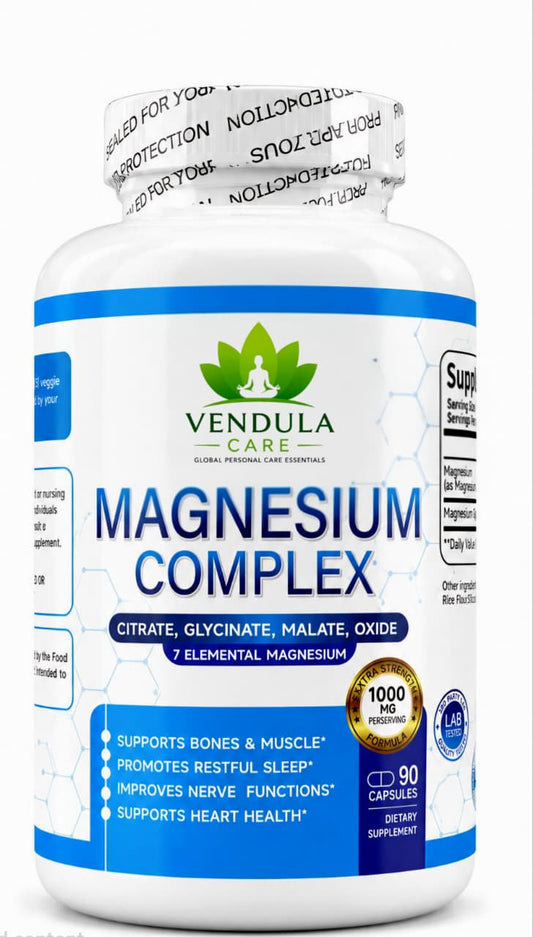
Magnesium Complex
-
Magnesium Complex Capsules for Daily Blood Sugar Support
Regular price $15Regular price$35Sale price $15Sale
Magnesium Complex
Magnesium-complex combines multiple forms of magnesium to support everyday wellness, including normal muscle function, energy production, and relaxation. Designed for convenient daily use, it offers a practical way to supplement your routine. Explore Vendula Care’s selection and choose an option that aligns with your personal health and wellness goals.
What Is a Magnesium Complex?
A magnesium complex is a dietary supplement that combines two or more forms of magnesium in one formula. Depending on the product, it may include magnesium glycinate, citrate, malate, oxide, taurate, or other forms. Each formula provides a specific amount of elemental magnesium per serving.
How Does a Magnesium Complex Support the Body?
Magnesium is an essential mineral involved in numerous normal processes throughout the body. Maintaining an adequate magnesium intake supports normal muscle and nerve function, cellular energy production, electrolyte balance, protein production, and bone health.
Why Are Multiple Forms of Magnesium Combined?
Manufacturers combine different forms of magnesium to create a convenient, multi-source supplement. However, a product containing more forms is not automatically better. The overall value depends on the specific ingredients, elemental magnesium content, serving size, quality standards, and individual needs.
What Should You Check Before Buying a Magnesium Complex?
Review the Supplement Facts label before choosing a magnesium complex supplement. Check the magnesium forms, elemental magnesium per serving, recommended dosage, additional ingredients, allergen information, and usage instructions.
Is a Magnesium Complex Suitable for Everyone?
Individual supplement needs can vary based on diet, health, medications, and lifestyle. Always follow the product directions. Consult a qualified healthcare professional before use if you take medication, have kidney problems, are pregnant or nursing, or are uncertain whether magnesium supplementation is appropriate for you.
How Does a Magnesium Complex Supplement Work?
A magnesium complex supplement provides magnesium through two or more forms within a single formula. After consumption, these magnesium compounds dissolve during digestion, and magnesium is absorbed primarily through the small intestine. The body then uses the mineral to support several normal biological processes.
How the Body Uses Magnesium
Magnesium contributes to normal muscle and nerve function, energy production, electrolyte balance, protein synthesis, and bone health. The body regulates absorbed magnesium according to factors such as dietary intake, current magnesium status, digestive health, and kidney function.
Why Do Magnesium Complexes Contain Multiple Forms?
Different forms of magnesium have distinct chemical structures. For example, magnesium may be combined with glycine, citric acid, malic acid, or oxygen to produce magnesium glycinate, citrate, malate, or oxide.
Manufacturers may combine these forms to create a convenient multi-source magnesium supplement. However, the number of magnesium types does not determine product quality on its own.
What Affects Magnesium Absorption?
The amount of magnesium absorbed from a supplement can vary according to:
-
The forms of magnesium used
-
Elemental magnesium per serving
-
Serving size and frequency
-
Food and nutrient intake
-
Digestive health
-
Medications and health conditions
What Is Elemental Magnesium?
Elemental magnesium is the actual quantity of magnesium delivered by a supplement—not the total weight of its magnesium compounds. Check the Supplement Facts panel to identify the elemental magnesium amount per serving when comparing magnesium complex capsules, tablets, powders, or liquids.
How Should You Use a Magnesium Complex Supplement?
Follow the serving directions provided on the individual product label. Do not exceed the recommended amount unless instructed by a qualified healthcare professional.
Consult a healthcare professional before taking a magnesium complex if you use prescription medications, have kidney problems, are pregnant or nursing, or have an existing medical condition. Dietary supplements are intended to complement a balanced diet and should not replace professional medical care.
Key Magnesium Complex Benefits
A magnesium complex supplement combines multiple forms of magnesium in one convenient formula. Magnesium is an essential mineral that contributes to many normal processes in the body. Its benefits depend on the product’s ingredients, elemental magnesium content, serving size, and the individual’s nutritional needs.
Supports Normal Muscle Function
Magnesium plays an important role in normal muscle contraction and relaxation. Maintaining an adequate magnesium intake may support comfortable movement and normal muscle function during everyday activities.
Helps Maintain Normal Nerve Function
The body uses magnesium to support communication between the brain, nerves, and muscles. A magnesium complex can help supplement dietary intake when additional magnesium is appropriate.
Contributes to Cellular Energy Production
Magnesium participates in processes that help the body convert food into usable energy. It supports normal energy metabolism but should not be considered an instant energy booster or a substitute for adequate sleep and balanced nutrition.
Supports Electrolyte Balance
Magnesium is an important electrolyte that works alongside minerals such as potassium, sodium, and calcium. Balanced electrolyte intake helps support normal muscle, nerve, and cellular functions.
Supports Bone Health
Magnesium contributes to the maintenance of normal bones and works with nutrients such as calcium and vitamin D. Long-term bone wellness also depends on diet, physical activity, age, and overall health.
Supports Normal Protein Production
The body requires magnesium for normal protein synthesis, a cellular process involved in maintaining tissues and supporting everyday body functions.
Offers Multi-Form Convenience
A magnesium complex combines several magnesium sources in a single capsule, tablet, powder, or liquid formula. This provides a convenient alternative for customers who prefer a multi-form magnesium supplement.
Results and Individual Needs May Vary
The benefits of a magnesium complex vary based on diet, health, dosage, and product formulation. Follow the Supplement Facts label and recommended directions. Consult a healthcare professional before use if you take medication, have kidney problems, are pregnant or nursing, or have an existing medical condition.
Different Forms Found in a Magnesium Complex
A magnesium complex combines two or more forms of magnesium in one dietary supplement. Each form pairs magnesium with a different compound, which affects its elemental magnesium content, solubility, and digestive tolerance. The exact combination varies by product, so always review the Supplement Facts label.
Magnesium Glycinate
Magnesium glycinate combines magnesium with the amino acid glycine. It is commonly included in magnesium complex supplements intended for convenient daily use.
What to Check
Review the amount of elemental magnesium provided by the complete formula rather than relying only on the total weight shown on the front label.
Magnesium Citrate
Magnesium citrate combines magnesium with citric acid. It is frequently used in capsules, tablets, powders, and drink mixes because it dissolves relatively well.
Digestive Considerations
Magnesium citrate may cause loose stools or digestive discomfort in some people, particularly when consumed in larger amounts.
Magnesium Malate
Magnesium malate combines magnesium with malic acid, a naturally occurring compound involved in cellular energy processes. It is often included in multi-form magnesium supplements.
Formula Differences
The amount of magnesium malate and its contribution to total elemental magnesium can vary considerably among products.
Magnesium Oxide
Magnesium oxide combines magnesium with oxygen and contains a relatively high proportion of elemental magnesium by weight. However, the amount listed for the compound is not the same as the amount the body absorbs.
Label Reading Tip
Use the Supplement Facts panel to compare elemental magnesium per serving instead of judging a product solely by milligram claims on its front label.
Magnesium Taurate
Magnesium taurate combines magnesium with taurine, an amino sulfonic acid. It may appear in broader magnesium complex formulas alongside more commonly used forms.
Product Availability
Not every magnesium complex contains magnesium taurate, so customers should verify the ingredient list before purchasing.
Magnesium L-Threonate
Magnesium L-threonate is magnesium combined with threonic acid. It is used in some specialty magnesium supplements and may increase the price of a formula.
Avoid Unsupported Expectations
A premium ingredient or higher price does not guarantee better results. Evaluate the complete formula, serving information, and quality standards.
How to Compare Magnesium Forms
When choosing a magnesium complex supplement, compare:
-
Forms of magnesium included
-
Elemental magnesium per serving
-
Number of capsules or tablets required
-
Additional ingredients and allergens
-
Suggested use and safety warnings
-
Third-party testing information, when available
The best magnesium complex is not necessarily the product with the greatest number of forms. Choose a clearly labeled formula that suits your needs, and consult a qualified healthcare professional if you take medication, have kidney problems, are pregnant or nursing, or have an existing health condition.
What Is a Triple Magnesium Complex?
A triple magnesium complex is a dietary supplement that combines three forms of magnesium in one formula. Common combinations may include magnesium glycinate, citrate, malate, or oxide, although ingredients vary by product. Check the Supplement Facts label to confirm the exact forms and elemental magnesium provided.
How Does a Triple Magnesium Complex Work?
After digestion, magnesium is absorbed primarily through the small intestine. The body uses this essential mineral to support normal muscle and nerve function, cellular energy production, electrolyte balance, protein synthesis, and bone health.
Why Are Three Forms of Magnesium Combined?
Manufacturers combine three magnesium sources to create a convenient multi-form supplement. Each form has a different chemical composition, elemental magnesium content, solubility, and digestive profile.
The term “triple magnesium complex” describes the number of magnesium forms included. It does not automatically mean that the formula is stronger, absorbs better, or is more suitable for every person.
Common Forms in Triple Magnesium Complex Supplements
A triple magnesium complex may contain:
-
Magnesium glycinate: Magnesium combined with the amino acid glycine
-
Magnesium citrate: Magnesium combined with citric acid
-
Magnesium malate: Magnesium combined with malic acid
-
Magnesium oxide: Magnesium combined with oxygen
-
Magnesium taurate: Magnesium combined with taurine
Does Every Triple Magnesium Complex Use the Same Blend?
No. Formulas can differ significantly in magnesium sources, serving sizes, additional ingredients, and elemental magnesium content. Never assume two products are equivalent simply because both are labeled as triple magnesium complexes.
How to Choose a Triple Magnesium Complex
Compare the following information before purchasing:
-
Three magnesium forms included
-
Elemental magnesium per serving
-
Number of capsules or tablets required
-
Other active and inactive ingredients
-
Allergen and dietary information
-
Suggested use and safety warnings
-
Quality-testing information, when available
Is a Triple Magnesium Complex Right for You?
The appropriate magnesium supplement depends on your diet, health, medications, and nutritional needs. Follow the label directions and consult a qualified healthcare professional before use if you take medication, have kidney problems, are pregnant or nursing, or have an existing medical condition.
Magnesium Complex vs. Single-Form Magnesium
Choosing between a magnesium complex and a single-form magnesium supplement depends on the formula, elemental magnesium content, digestive tolerance, and personal wellness needs. Neither option is automatically better for everyone, so compare the complete Supplement Facts label before purchasing.
What Is a Magnesium Complex?
A magnesium complex combines two or more forms of magnesium in one supplement. A formula may contain magnesium glycinate, citrate, malate, oxide, taurate, or other forms.
Advantages of a Magnesium Complex
A multi-form magnesium supplement provides several magnesium sources in one capsule, tablet, powder, or liquid. It may appeal to customers who value convenience and prefer a blended formula.
What Is Single-Form Magnesium?
A single-form supplement contains one primary magnesium compound, such as magnesium glycinate or magnesium citrate. This makes it easier to identify the specific form and evaluate how well it suits an individual’s routine.
Advantages of Single-Form Magnesium
A single-form product may be preferable for customers who want a straightforward formula, need a particular magnesium type, or wish to avoid ingredients included in a broader blend.
Magnesium Complex and Single-Form Magnesium Comparison
|
Feature |
Magnesium Complex |
Single-Form Magnesium |
|
Magnesium sources |
Two or more forms |
One primary form |
|
Formula |
Broader blend |
More focused formulation |
|
Convenience |
Multiple forms in one product |
One form per product |
|
Label evaluation |
Requires reviewing each included form |
Usually easier to assess |
|
Elemental magnesium |
Varies by complete blend |
Varies by compound and serving |
|
Digestive tolerance |
Depends on the full formula |
Depends on the selected form |
|
Best suited for |
Customers wanting a multi-form supplement |
Customers seeking one specific form |
Which Magnesium Supplement Should You Choose?
Consider the following factors when comparing products:
-
Forms of magnesium included
-
Elemental magnesium per serving
-
Recommended serving size
-
Digestive tolerance
-
Additional ingredients and allergens
-
Third-party quality testing, when available
-
Advice from a qualified healthcare professional
More Forms Do Not Always Mean Better Quality
A magnesium complex with numerous forms is not necessarily more effective than a well-formulated single-form supplement. Clear labeling, suitable dosage, ingredient quality, and individual needs are more important than the number of magnesium sources.
Always follow the product directions. Consult a healthcare professional before taking magnesium supplements if you use medication, have kidney problems, are pregnant or nursing, or have an existing health condition.
Who May Consider Taking a Magnesium Complex?
A magnesium complex may be considered by adults who want to supplement their dietary magnesium intake with multiple forms in one convenient product. Individual needs vary, and a supplement should complement—not replace—a balanced diet containing magnesium-rich foods.
Adults With Limited Dietary Magnesium Intake
People who regularly consume few leafy greens, legumes, nuts, seeds, or whole grains may want to discuss their magnesium intake with a qualified healthcare professional.
Start With Your Diet
A healthcare professional can help determine whether dietary changes or a magnesium complex supplement is appropriate based on individual nutritional needs.
Physically Active Adults
Active adults may choose a magnesium supplement because magnesium supports normal muscle function, nerve function, electrolyte balance, and cellular energy production.
Supplements Do Not Replace Hydration and Nutrition
A magnesium complex should be part of a balanced routine that includes adequate food, fluids, rest, and appropriate recovery.
Adults Seeking a Multi-Form Supplement
Some customers prefer the convenience of receiving two or more magnesium forms in one capsule, tablet, powder, or liquid formula.
More Forms Are Not Automatically Better
Product quality depends on elemental magnesium, serving size, ingredient transparency, manufacturing standards, and individual suitability—not simply the number of magnesium forms.
Older Adults
Dietary intake, medication use, and the body’s ability to absorb and retain nutrients may change with age. Older adults should speak with a healthcare professional before adding a magnesium complex to their routine.
Who Should Seek Medical Guidance First?
Consult a qualified healthcare professional before taking a magnesium complex if you:
-
Have kidney disease or reduced kidney function
-
Take prescription or over-the-counter medications
-
Are pregnant or nursing
-
Have a digestive or chronic health condition
-
Already use products containing magnesium
-
Are considering magnesium for persistent symptoms
Choose Magnesium Supplements Responsibly
Always review the Supplement Facts label for magnesium forms, elemental magnesium per serving, additional ingredients, allergens, and directions. Do not exceed the recommended serving unless instructed by a qualified healthcare professional.
How to Choose the Best Magnesium Complex Supplement
The best magnesium complex supplement should match your nutritional needs, daily routine, dietary preferences, and healthcare provider’s guidance. Instead of choosing a product based only on the number of magnesium forms or the largest milligram claim, examine the complete formula and Supplement Facts label.
Review the Forms of Magnesium
A magnesium complex may include glycinate, citrate, malate, oxide, taurate, or other magnesium compounds. Each product uses a different combination, so confirm which forms are actually included.
Do Not Judge a Formula by the Number of Forms
A formula containing many magnesium types is not automatically better than a triple magnesium complex or single-form supplement. Ingredient transparency and appropriate elemental magnesium are more meaningful comparison points.
Check the Elemental Magnesium
Elemental magnesium is the actual amount of magnesium supplied per serving. It is different from the total weight of magnesium compounds promoted on the front of a bottle.
Read the Supplement Facts Panel
Check the elemental magnesium amount, percent Daily Value, serving size, and number of capsules or tablets required per serving.
Compare the Complete Formula
Before choosing a magnesium complex supplement, review:
-
Magnesium forms included
-
Elemental magnesium per serving
-
Recommended serving size
-
Additional active ingredients
-
Fillers, flavors, sweeteners, and allergens
-
Dietary labels, such as vegan or gluten-free
-
Storage instructions and expiration date
Look for Clear Quality Information
Choose products with readable labels, traceable manufacturer details, clear lot information, and quality-testing disclosures. If a product claims to be third-party tested, look for specific information identifying the testing organization or certification.
Avoid Exaggerated Supplement Claims
Be cautious of products promising instant results or claiming to diagnose, treat, cure, or prevent medical conditions. Magnesium supplements are intended to support nutritional intake, not replace medical treatment.
Understanding Elemental Magnesium on the Label
Elemental magnesium is the actual amount of magnesium a supplement provides per serving. It is one of the most important details to review when comparing magnesium complex supplements because the total weight of a magnesium compound is not the same as the amount of usable magnesium it contains.
Elemental Magnesium vs. Magnesium Compound Weight
Magnesium in supplements is attached to another substance to create compounds such as magnesium glycinate, citrate, malate, or oxide. The listed compound weight includes both the magnesium and its attached substance, while elemental magnesium refers only to the magnesium portion.
Why This Difference Matters
A front label may highlight a large milligram amount for a magnesium complex blend. However, that number may describe the combined weight of all compounds rather than the elemental magnesium supplied. Use the Supplement Facts panel for a more accurate comparison.
How to Read a Magnesium Supplement Label
Review these details before choosing a magnesium complex:
-
Serving size: The number of capsules, tablets, gummies, or scoops in one serving
-
Magnesium amount: The elemental magnesium provided per serving
-
Percent Daily Value: The percentage contributed by one serving
-
Magnesium source: The forms used in the formula
-
Other ingredients: Fillers, coatings, flavors, sweeteners, and allergens
Example of Elemental Magnesium Labeling
|
Label Information |
What It Means |
|
Serving size |
Quantity required to receive the listed nutrients |
|
Magnesium |
Elemental magnesium supplied per serving |
|
Percent Daily Value |
Contribution to the established daily reference amount |
|
“As magnesium citrate and glycinate” |
Compounds used as magnesium sources |
|
Proprietary blend weight |
Total blend weight, which may not equal elemental magnesium |
Compare Equal Serving Sizes
One supplement may list its magnesium amount per capsule, while another lists it per two- or three-capsule serving. Compare products using equal servings and check how many servings each container provides.
FAQs
What Is Magnesium Complex Good For?
A magnesium complex supports normal muscle and nerve function, cellular energy production, electrolyte balance, protein synthesis, and bone health.
Is Magnesium Complex Good for You?
A magnesium complex may complement a balanced diet when additional magnesium is appropriate, but its suitability depends on your health, diet, medications, and nutritional needs.
What Is the Best Magnesium Complex?
The best magnesium complex provides clearly labeled magnesium forms, an appropriate amount of elemental magnesium, transparent ingredients, and credible quality-testing information.
What Is Magnesium Complex?
A magnesium complex is a dietary supplement that combines two or more forms of magnesium, such as magnesium glycinate, citrate, malate, or oxide, in one formula.
When Is the Best Time to Take Magnesium Complex?
The best time to take a magnesium complex depends on its directions and your routine; take it consistently and with food if the label or your healthcare professional recommends it.